How to make a character turnaround sheet with AI from one reference (front, side, back)
By DreamLayer AI
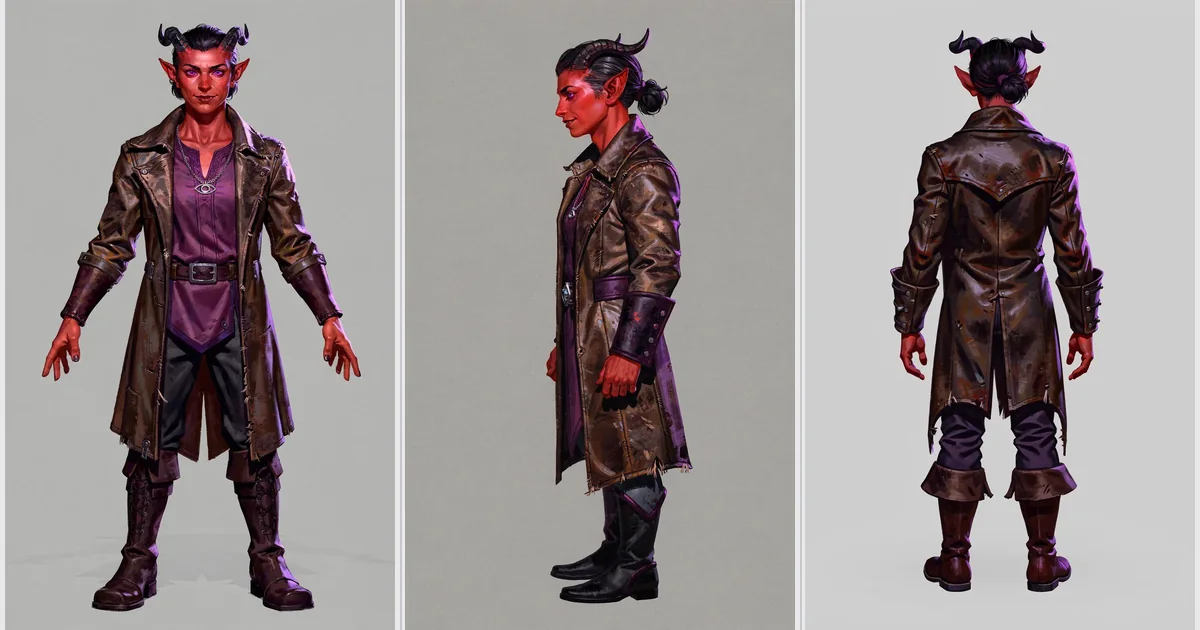
A character turnaround is the set of views a modeler or animator needs to build the same character from every angle: front, side, back, sometimes three-quarter. Concept artists draw them. If you have an approved character image and no time to draw the other views, an image model can produce them from that one reference. This post shows exactly what that looks like, with the prompts, the results, and the parts that did not hold, using DreamLayer. I build DreamLayer, so read the claims with that in mind; every image below is a real, unedited output.
To start your own views, open the character turnaround generator. Choose a view and describe the details you want to preserve.
What you need
- One approved image of the character. A waist-up or full-body portrait on a plain background works best. A busy scene gives the model more to misread.
- A style clause you will repeat word for word in every prompt.
- This example used three Agent API credits, one per finished view. New public API credits cost US$0.15 each. App credit usage varies by task.
The reference for this post is the tiefling warlock from the D&D character art page: crimson skin, curved black horns, violet eyes, a worn leather coat over a purple tunic, a silver eye pendant.
Step 1: the front view, and why it comes first
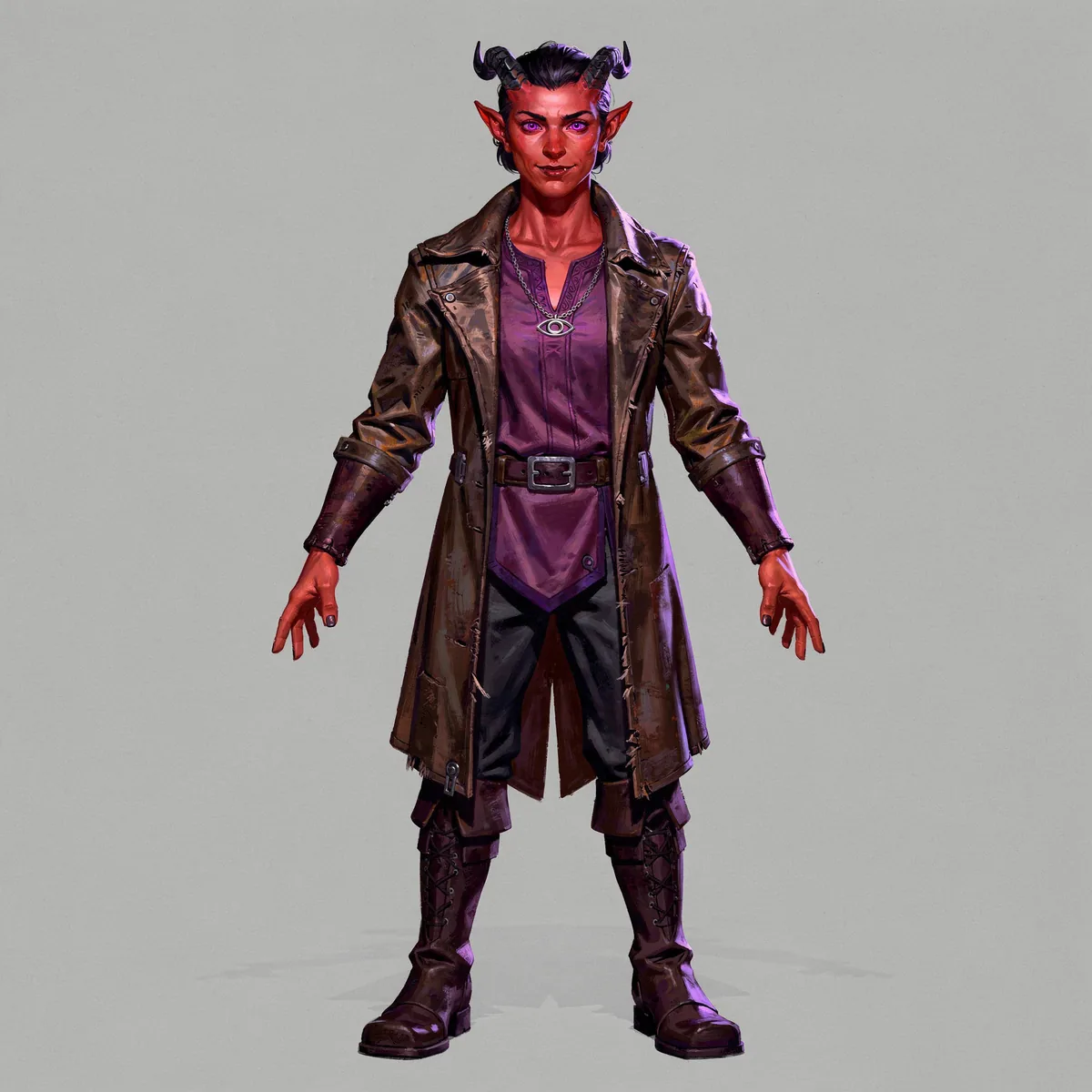
The reference was waist-up. That means the legs, belt, and boots do not exist yet. The front view is where the model invents them, so generate it first, look at it, and approve it before you make the other two. Whatever it decides here becomes the canon.
Character turnaround sheet, FRONT view. Keep this exact same tiefling warlock: same face, crimson skin, curved black horns, violet eyes, dark hair, worn leather coat over the purple tunic, silver eye pendant, dark trousers and boots. Full body from head to feet, standing straight in a relaxed neutral pose facing the viewer directly, arms slightly away from the body, feet shoulder width apart, flat even lighting, plain flat light grey studio background, same painterly illustration style, no text, no watermark.Result: face, horns, eyes, coat, tunic, pendant, and palette all carried from the portrait. The model added a belt with a square buckle and tall laced boots. Fine. Approved.
Step 2: the side view
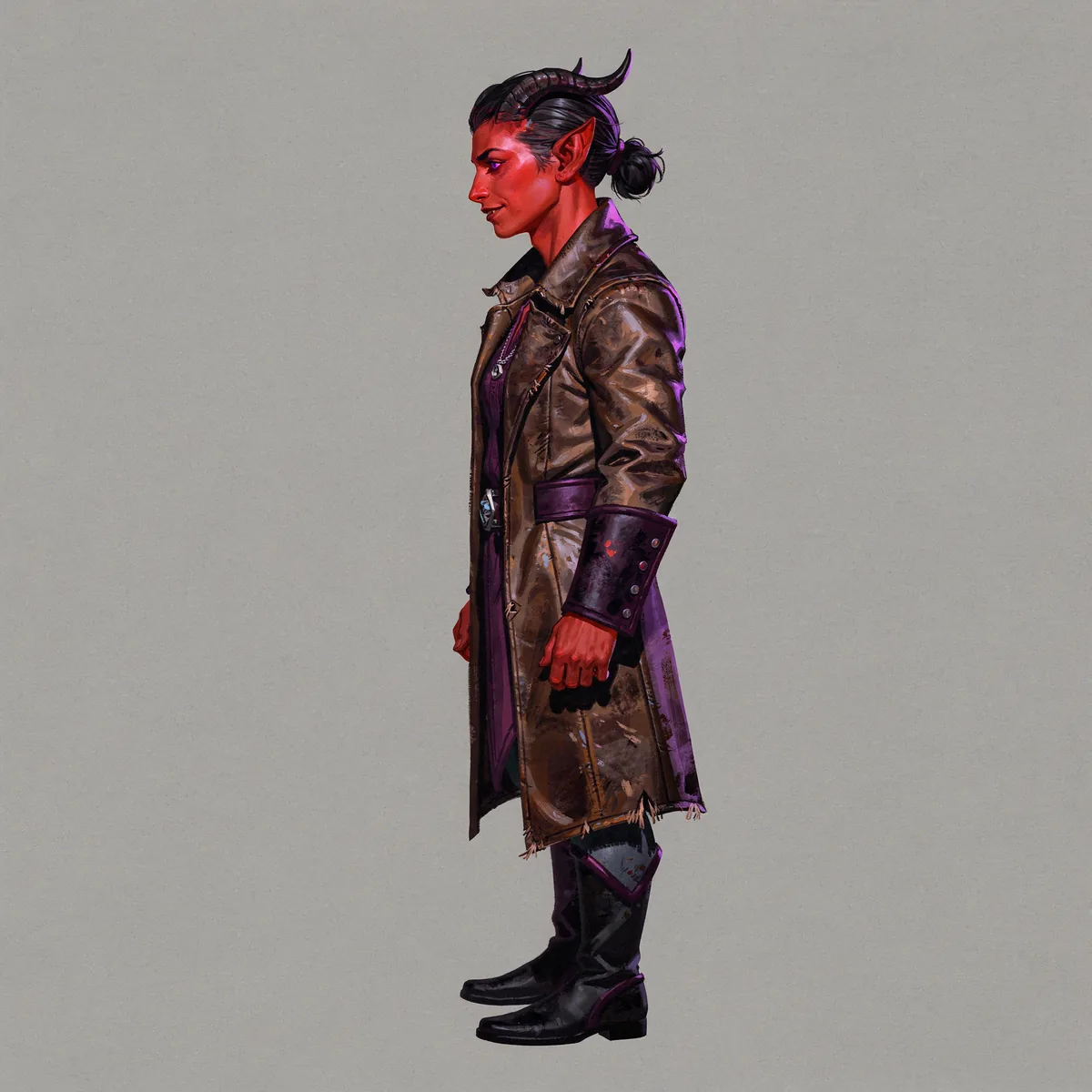
Same reference, same prompt, one line changed.
Character turnaround sheet, SIDE view (left profile). Keep this exact same tiefling warlock: same face, crimson skin, curved black horns, violet eyes, dark hair tied back, worn leather coat over the purple tunic, silver eye pendant, dark trousers and boots. Full body from head to feet, standing straight in a relaxed neutral pose seen exactly from the left side in profile, arms relaxed at the sides, flat even lighting, plain flat light grey studio background, same painterly illustration style, no text, no watermark.Result: horns, the bun, the coat with its strapped cuffs, the pendant, and the frayed hem all held. The boots lost the lacing from the front view. The first attempt did not return an image, so I retried the same prompt. The successful image used one Agent API credit.
Step 3: the back view
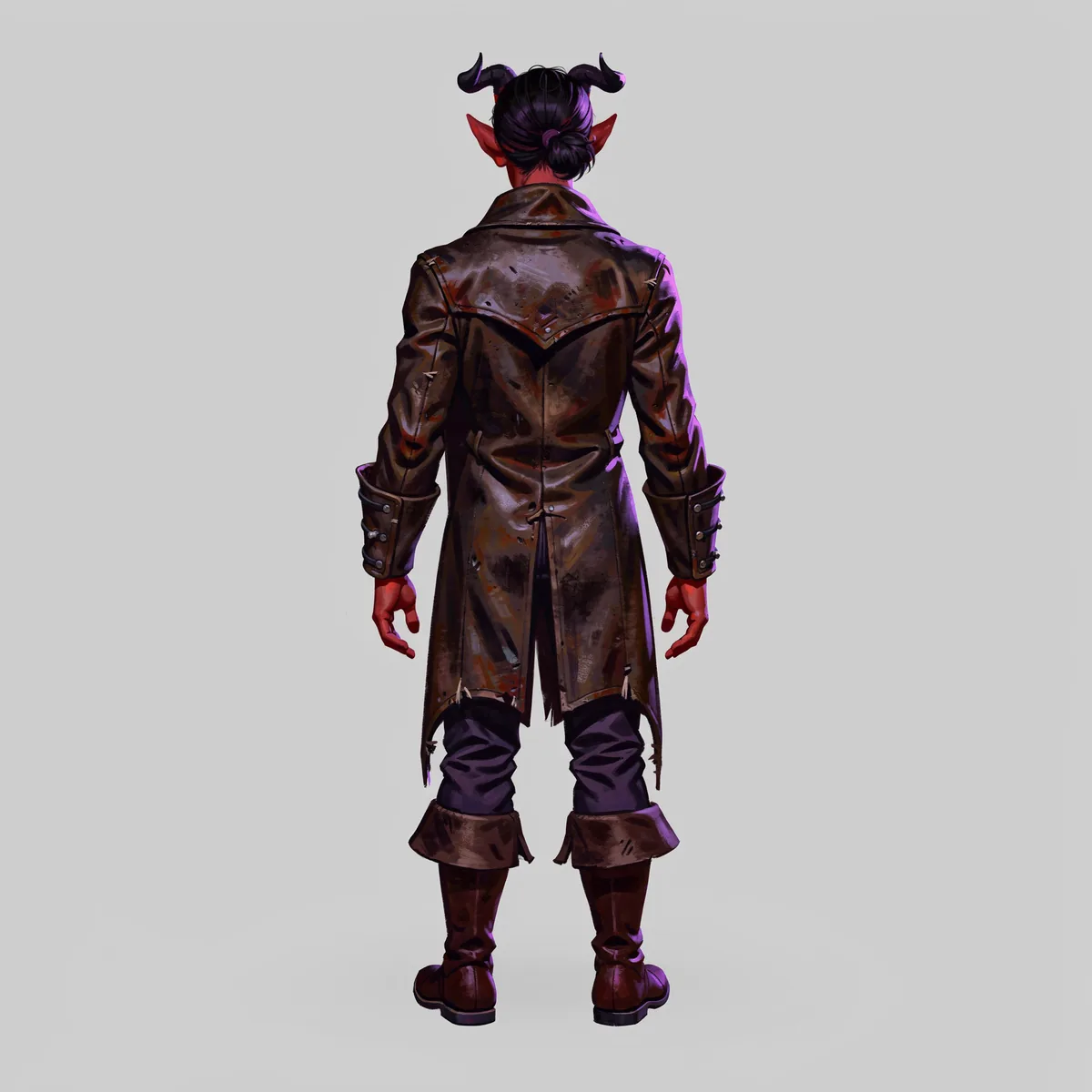
The view the portrait never showed, so the one to check hardest.
Character turnaround sheet, BACK view. Keep this exact same tiefling warlock: same crimson skin, curved black horns, dark hair tied back in a small bun, worn leather coat over the purple tunic, dark trousers and boots. Full body from head to feet, standing straight in a relaxed neutral pose seen exactly from behind, arms relaxed at the sides, flat even lighting, plain flat light grey studio background, same painterly illustration style, no text, no watermark.Result: horns, bun, the coat's back yoke and strapped cuffs, the frayed hem, and the palette held. The boots gained folded brown cuffs and the trousers show more of themselves than in the front view.
What held and what drifted
Held in all three: the face and horns, the coat and its cuffs, the pendant where visible, the palette and the painterly finish.
Drifted: the boots (laced, plain, folded cuff), the coat length by about a hand's width, and the hair, which I asked to be tied back in the side and back prompts but not the front. That last one is on me, not the model: say the same thing in every prompt.
The pattern is simple. Everything the reference showed carried. Everything the reference did not show got decided fresh each time.
How to close the gap
- Chain the reference. Approve the front view, then generate the side and back from the front view instead of from the portrait. The boots and belt already exist in that reference, so they carry.
- Name the invented parts. Once the front view is approved, write the boots, belt, and hem into every later prompt in the same words.
- Regenerate the miss, not the set. A retry uses additional credits; App usage depends on the task.
Before you hand the sheet to anyone
Each view was generated on its own, so the sheet is only as consistent as your review. Use the approved front view as the ruler and check five things: head height and shoulder width across views; the side that asymmetric accessories sit on; the palette, without color correction; the feet on one baseline after you scale the images to the same head height; and anything the reference never showed.
What this is not
It is not a 360 turnaround. You get fixed views as separate images, not a rotation, a GIF, or a 3D model. It is not an assembled sheet; you or your coding agent lay the views out. And it is not a sprite sheet; that is a different workflow where the model makes frames and an agent builds the grid, described on the game asset page.
Running it from a coding agent
The DreamLayer MCP server exposes the same operation the examples used: image-to-image with the approved image as the input asset and the view prompt. In Claude Code, Codex, or Cursor, ask the agent to run the three views in order, save each result, and stop after each one so you can approve it. The same three requests work from the API and the CLI.